ACCV 2026 Workshop  ·  Osaka, Japan

MIRAI Driving

Multimodal Intelligence and Reasoning for
Autonomous and Intelligent Driving

Date Mon, 15 Dec 2026 · PM
Room Room 1007
Venue Grand Cube Osaka
Format Half-day · Invited

Aim & Scope

MIRAI Driving brings together researchers from computer vision, machine learning, robotics, intelligent transportation systems, and industry to discuss recent advances in multimodal intelligence and reasoning for autonomous driving. Modern intelligent vehicles increasingly rely on diverse information sources such as cameras, LiDAR, radar, HD maps, vehicle telemetry, user input, and V2X communication. These multimodal signals provide rich information for perception, prediction, planning, control, and decision making.

Autonomous driving nevertheless remains challenging due to long-tail scenarios, rare safety-critical events, domain shifts, complex human–vehicle interactions, and the need for robust reasoning in previously unseen environments. Recent advances in foundation models, large language models, vision–language–action models, and world models offer new opportunities to address these challenges, reshaping the development of next-generation autonomous driving systems through stronger multimodal perception, reasoning, planning, and interaction capabilities.

This workshop provides a focused forum for discussing multimodal intelligence, foundation models for driving, world models, V2X intelligence, digital twins, trustworthy AI, human–vehicle interaction, and end-to-end driving systems. It is organized as a half-day invited event featuring keynote talks, invited presentations, and an interactive panel discussion — a format intended to encourage in-depth, high-quality exchange between academia and industry rather than a competition or proceedings track.

This is an invited workshop. There is no call for papers and no proceedings track. Attendance is open to all registered ACCV 2026 participants — no separate registration is required beyond the main conference.

Topics of Interest

Discussion at MIRAI Driving centers on, but is not limited to, the following themes.

🌸

Multimodal Perception & Fusion

Camera, LiDAR, radar, HD map, telemetry, and language fusion for robust scene understanding.

🧠

Foundation Models for Driving

LLMs, VLMs, and vision–language–action models applied to perception, planning, and control.

🌍

World Models & Simulation

Generative world models, driving scene synthesis, and closed-loop evaluation.

📡

V2X & Cooperative Intelligence

Vehicle-to-everything communication, cooperative perception, and multi-agent intelligence.

🏙️

Digital Twins for Mobility

High-fidelity digital twins for testing, validation, and intelligent transportation systems.

🛡️

Trustworthy & Safe Autonomy

Robustness, uncertainty, interpretability, and safety under long-tail and low-quality data.

🤝

Human–Vehicle Interaction

Human-autonomy teaming, driver modeling, and interaction-aware decision making.

🚗

End-to-End Driving Systems

Unified differentiable pipelines from sensing to action, and embodied driving agents.

Invited Keynote Speakers

Four keynote speakers have been invited to present at MIRAI Driving.

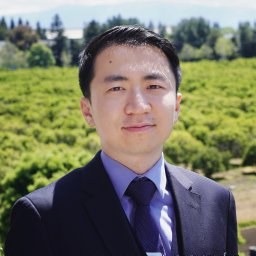
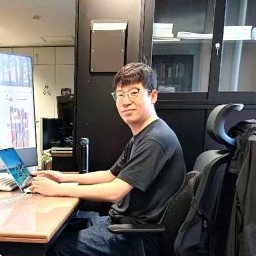
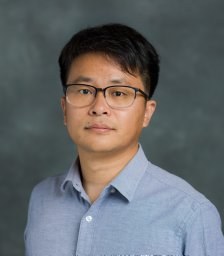
Ziran Wang

Dr. Ziran Wang

Purdue University, USA

Assistant Professor · Purdue Digital Twin Lab

Dr. Ziran Wang leads the Purdue Digital Twin Lab. His research focuses on digital twins, autonomous driving, intelligent transportation systems, and human-autonomy teaming. He received his Ph.D. from the University of California, Riverside, and has authored more than 80 publications and 50 patent applications. His work has received the U.S. Department of Transportation Dissertation Award and multiple SAE best paper awards.

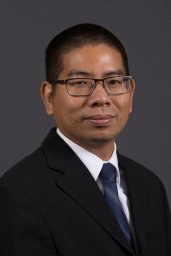
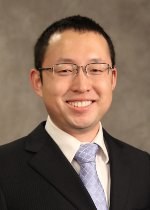
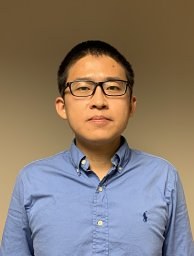
Runsheng Xu

Dr. Runsheng Xu

Waymo, USA

Senior Research Scientist

Dr. Runsheng Xu works on multimodal large language models for autonomous driving at Waymo. He received his Ph.D. from UCLA and previously worked at Mercedes-Benz R&D North America and OPPO R&D US. His research interests include autonomous driving, multimodal foundation models, diffusion models, and multi-agent intelligence. He has published more than 50 papers in leading venues including CVPR, ICCV, ECCV, ICRA, and IEEE Transactions, and has led influential open-source projects such as OpenCDA, OPV2V, V2V4Real, V2X-DiT, and WOD-E2E.

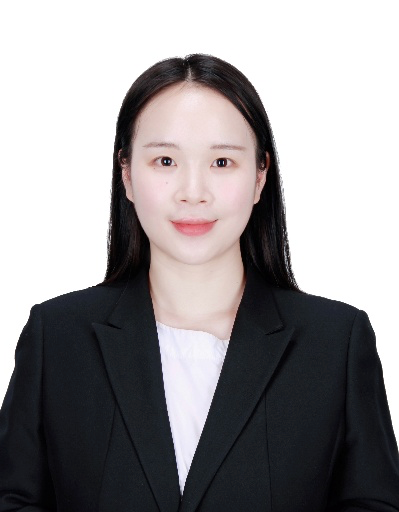
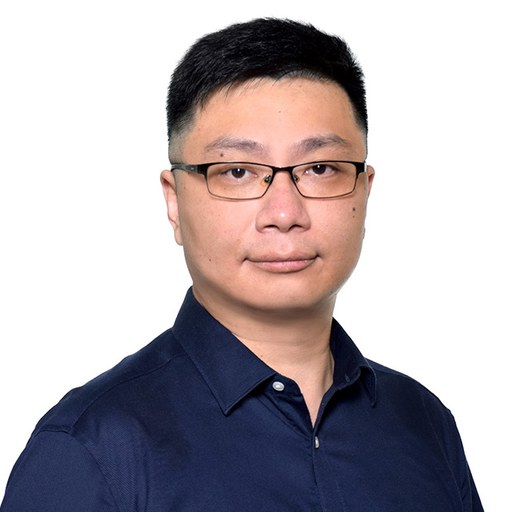
Heye Huang

Dr. Heye Huang

KAIST, South Korea

Assistant Professor · ACES Lab, Cho Chun Shik Graduate School of Mobility

Dr. Heye Huang leads the ACES Lab at KAIST. Before joining KAIST, she was a postdoctoral associate at the MIT SMART Center and a research associate at the University of Wisconsin–Madison. She received her Ph.D. from Tsinghua University and was a visiting scholar at the Department of Cognitive Robotics, TU Delft. Her research focuses on safe and trustworthy autonomous driving, generative AI, and large-model-based reasoning and decision making. She has published more than 60 papers and holds over 40 invention patents. Her honors include the Beijing Outstanding Graduate Award, the National Scholarship for Graduate Students, the Academic Rising Star Award from Tsinghua University, the World Intelligent Transportation Young Leaders Development Program, five Best Paper Awards, and the First Prize of the Beijing Science and Technology Progress Award.

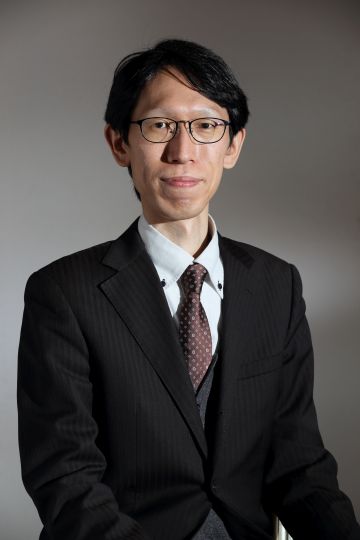
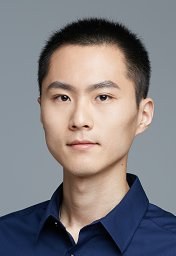
Takahiro Ogawa

Prof. Takahiro Ogawa

Hokkaido University, Japan

Professor · Faculty of Information Science and Technology / Laboratory of Media Dynamics

Prof. Takahiro Ogawa is a Professor with the Faculty of Information Science and Technology, Hokkaido University, where he leads the Laboratory of Media Dynamics. He received his B.S., M.S., and Ph.D. degrees from Hokkaido University in 2003, 2005, and 2007, respectively. His research covers large-scale and diverse cross-media analysis and visualization, spanning images, video, music, medical and brain activity data, planetary imagery, infrastructure information, sports footage, and social media. His current work centers on multimodal AI, including vision–language models and vision–language–action models for Physical AI, as well as information retrieval and recommender systems, with applications to infrastructure inspection, medical image analysis, and industrial monitoring. He has authored more than 255 peer-reviewed journal articles and over 450 international conference papers. He served as Conference Chair of IEEE GCCE 2019 and as a Vice President of The Institute of Image Information and Television Engineers.
Program

Half-day in-person workshop on the afternoon of Monday, 15 December 2026, in Room 1007 at the Osaka International Convention Center (Grand Cube Osaka). The tentative schedule is as follows.

  1. 13:00 – 13:15 Opening and Welcome
  2. 13:15 – 13:55 Keynote Talk IDr. Ziran Wang — Purdue University
  3. 13:55 – 14:35 Keynote Talk IIDr. Runsheng Xu — Waymo
  4. 14:35 – 14:55 Coffee Break
  5. 14:55 – 15:30 Keynote Talk IIIDr. Heye Huang — KAIST
  6. 15:30 – 16:05 Keynote Talk IVProf. Takahiro Ogawa — Hokkaido University
  7. 16:05 – 16:30 Panel Discussion and Closing Remarks

Panel Discussion

The panel will focus on open challenges and future directions in multimodal foundation models, world models, V2X intelligence, embodied driving agents, and trustworthy autonomous driving.

Venue
Osaka International Convention Center (Grand Cube Osaka) · 10th Floor, Room 1007
Program is tentative and subject to change. Please check back for updates.

Organizers

Our organizing team has extensive research experience in computer vision, machine learning, autonomous driving, intelligent transportation systems, and trustworthy AI, with publications in top-tier venues including CVPR, ICCV, ECCV, NeurIPS, ICML, ICRA, IEEE TPAMI, IEEE TIV, and IEEE TITS.

Xianbiao Hu

Xianbiao Hu

Pennsylvania State University, USA

Associate Professor leading the SmartMobility Lab; Managing Director of the Journal of Intelligent Transportation Systems. Research on intelligent transportation systems, connected and autonomous vehicles, and AI-enabled mobility.

Guang Li

Guang Li

Hokkaido University, Japan

Assistant Professor working on dataset distillation, data-efficient learning, and generative modeling. Recipient of the 2024 IEEE Sapporo Young Professionals Best Researcher Award. More than 40 papers in leading venues, including NeurIPS, ICLR, CVPR, ICCV, and ECCV.

Xiaopeng Li

Xiaopeng Li

University of Wisconsin–Madison, USA

Harvey D. Spangler Professor directing the USDOT Rural Autonomous Vehicle Program for People Movement. Fellow of ASCE and Senior Member of IEEE; editor for Transportation Research Part E, IEEE TITS, and IEEE ITSM.

Ping Liu

Ping Liu

University of Nevada, Reno, USA

Assistant Professor working on computer vision, multimodal learning, generative AI, trustworthy machine learning, and autonomous systems. More than 80 papers in leading conferences and journals.

Keke Long

Keke Long

Rutgers University, USA

Incoming Assistant Professor focusing on trustworthy artificial intelligence in transportation, connected and automated vehicles, and digital twins. More than 30 papers in leading transportation journals.

Chen Lv

Chen Lv

Nanyang Technological University, Singapore

Associate Professor and founder of the Automated Driving and Human-Machine System (AutoMan) Research Lab. Research on advanced vehicle control, autonomous driving, and intelligent transportation systems.

Hongkai Yu

Hongkai Yu

University of Tennessee, Knoxville, USA

Associate Professor and Associate Editor for IEEE Transactions on Intelligent Vehicles, IEEE Open Journal of Intelligent Transportation Systems, and Green Energy and Intelligent Transportation. More than 80 papers in venues including CVPR, ICCV, AAAI, ICRA, and ACM MM.

Tianyun Zhang

Tianyun Zhang

Cleveland State University, USA

Assistant Professor working on computer vision, machine learning, foundation models, and trustworthy AI. More than 40 papers in top-tier conferences and journals including NeurIPS, CVPR, ICCV, ECCV, and AAAI.

Website and Publicity

Important Dates

Workshop website launchAugust 2026
Final program announcedNovember 2026
MIRAI Driving Workshop15 December 2026 · PM · Room 1007
ACCV 202614–18 December 2026 · Osaka, Japan

As an invited workshop, MIRAI Driving has no submission or notification deadlines.

Contact

For questions about the MIRAI Driving workshop, please contact the organizing committee.

ACCV 2026 Workshops ↗